Sunday, December 4, 2011

Nikos Kazantzakis quotes of a Religious Nature


“The canary began to sing again. The sun had struck it, and its throat and tiny breast had filled with song. Francis gazed at it for a long time, not speaking, his mouth hanging half opened, his eyes dimmed with tears.


"The canary is like man's soul," he whispered finally. "It sees bars round it, but instead if despairing, it sings. It sings, and wait and see, Brother Leo: one day its song shall break the bars.”
― Nikos Kazantzakis, Saint Francis


“When an almond tree became covered with blossoms in the heart of winter, all the trees around it began to jeer. 'What vanity,' they screamed, 'what insolence! Just think, it believes it can bring spring in this way!' The flowers of the almond tree blushed for shame. 'Forgive me, my sisters,' said the tree. 'I swear I did not want to blossom, but suddenly I felt a warm springtime breeze in my heart.”
― Nikos Kazantzakis, Saint Francis


“Overdraw me Lord, and who cares if I break!”
― Nikos Kazantzakis, The Last Temptation of Christ


“We are not men, to have need of another, an eternal life; we are women, and for us one moment with man we love is everlasting Paradise, one moment far from the man we love is everlasting hell. It is here on earth that we women love out eternity”
― Nikos Kazantzakis, The Last Temptation of Christ


“My principle anguish and the source of all my joys and sorrows from my youth onward has been the incessant, merciless battle between the spirit and the flesh.”
― Nikos Kazantzakis, The Last Temptation of Christ


“Truly, everything in this world depended on time. Time ripened all. If you had time, you succeeded in working the human mud internally and turning it into spirit. Then you did not fear death. If you did not have time, you perished.”
― Nikos Kazantzakis, The Last Temptation of Christ


“I say one thing, you write another, and those who read you understand still something else! I say: cross, death, kingdom of heaven, God...and what do you understand? Each of you attaches his own suffering, interests and desires to each of these sacred words, and my words disappear, my soul is lost. I can't stand it any longer!”
― Nikos Kazantzakis, The Last Temptation of Christ


“When everyone drowns and I'm the only one to escape, God is protecting me. When everyone else is saved and I'm the only one to drown, God is protecting me then too.”
― Nikos Kazantzakis, The Last Temptation of Christ


“You will, Judas, my brother. God will give you the strength, as much as you lack, because it is necessary—it is necessary for me to be killed and for you to betray me. We two must save the world. Help me."

Judas bowed his head. After a moment he asked, "If you had to betray your master, would you do it?"

Jesus reflected for a long time. Finally he said, "No, I'm afraid I wouldn't be able to. That is why God pitied me and gave me the easier task: to be crucified.”
― Nikos Kazantzakis, The Last Temptation of Christ



Nikos Kazantzakis quotes


“What a strange machine man is! You fill him with bread, wine, fish, and radishes, and out comes sighs, laughter, and dreams.”

― Nikos Kazantzakis


“My entire soul is a cry, and all my work is a commentary on that cry.”
― Nikos Kazantzakis


“Every perfect traveler always creates the country where he travels.” 
― Nikos Kazantzakis


Yes, the purpose of earth is not life, it is not man, earth has existed without these, and it will live on without them. They are but the ephemeral sparks of its violent whirling.
Let us unite, let us hold each other tightly, let us merge our hearts, let us create –so long as the warmth of this earth endures, so long as no earthquakes, cataclysms, icebergs or comets come to destroy us – let us create for earth a brain and a heart, let us give a human meaning to the superhuman struggle. ”
― Nikos Kazantzakis


“With the passage of days in this godly isolation [desert], my heart grew calm. It seemed to fill with answers. I did not ask questions any more; I was certain. Everything - where we came from, where we are going, what our purpose is on earth - struck me as extremely sure and simple in this God-trodden isolation. Little by little my blood took on the godly rhythm. Matins, Divine Liturgy, vespers, psalmodies, the sun rising in the morning and setting in the evening, the constellations suspended like chandeliers each night over the monastery: all came and went, came and went in obedience to eternal laws, and drew the blood of man into the same placid rhythm. I saw the world as a tree, a gigantic poplar, and myself as a green leaf clinging to a branch with my slender stalk. When God's wind blew, I hopped and danced, together with the entire tree.”
― Nikos Kazantzakis


“Beauty is merciless. You do not look at it, it looks at you and does not forgive.”
― Nikos Kazantzakis


“Throughout my life my greatest benefactors have been my travels and my dreams. Very few men, living or dead, have helped me in my struggles.”
― Nikos Kazantzakis


“We come from a dark abyss, we end in a dark abyss, and we call the luminous interval life.”
― Nikos Kazantzakis


“Let your youth have free reign, it won't come again, so be bold and no repenting.”
― Nikos Kazantzakis


“You have your brush, you have your colors, you paint the paradise, then in you go.”
― Nikos Kazantzakis


“True teachers are those who use themselves as bridges over which they invite their students to cross; then, having facilitated their crossing, joyfully collapse, encouraging them to create their
own.”
― Nikos Kazantzakis


“I hope nothing. I fear nothing. I am free.”
― Nikos Kazantzakis


“A person needs a little madness, or else they never dare cut the rope and be free.” 
― Nikos Kazantzakis


“Ideal teachers are those who use themselves as bridges over which they invite their students to cross, then having facilitated their crossing, joyfully collapse, encouraging them to create bridges of their own.”
― Nikos Kazantzakis


“Since we cannot change reality, let us change the eyes which see reality.”
― Nikos Kazantzakis


“How simple and frugal a thing is happiness: a glass of wine, a roast chestnut, a wretched little brazier, the sound of the sea. . . . All that is required to feel that here and now is happiness is a simple, frugal heart.”
― Nikos Kazantzakis


Zorba Quotes - Nikos Kazanzakis


“This is true happiness: to have no ambition and to work like a horse as if you had every ambition. To live far from men, not to need them and yet to love them. To have the stars above, the land to your left and the sea to your right and to realize of a sudden that in your heart, life has accomplished its final miracle: it has become a fairy tale.” 
― Nikos Kazantzakis, Zorba the Greek


“God changes his appearance every second. Blessed is the man who can recognize him in all his disguises.” 
― Nikos Kazantzakis, Zorba the Greek


“You can knock on a deaf man's door forever.” 
― Nikos Kazantzakis, Zorba the Greek

“For I realize today that it is a mortal sin to violate the great laws of nature. We should not hurry, we should not be impatient, but we should confidently obey the eternal rhythm.”
― Nikos Kazantzakis, Zorba the Greek

“Happy is the man, I thought, who, before dying, has the good fortune to sail the Aegean sea.”
― Nikos Kazantzakis, Zorba the Greek

“When everything goes wrong, what a joy to test your soul and see if it has endurance and courage! An invisible and all-powerful enemy—some call him God, others the Devil, seem to rush upon us to destroy us; but we are not destroyed.”
― Nikos Kazantzakis, Zorba the Greek

“Life is trouble. Only death is not. To be alive is to undo your belt and *look* for trouble.”
― Nikos Kazantzakis, Zorba the Greek

“Look, one day I had gone to a little village. An old grandfather of ninety was busy planting an almond tree. ‘What, grandfather!’ I exclaimed. ‘Planting an almond tree?’ And he, bent as he was, turned around and said: ‘My son, I carry on as if I should never die.’ I replied: ‘And I carry on as if I was going to die any minute.’
Which of us was right, boss?”
― Nikos Kazantzakis, Zorba the Greek

“I was happy, I knew that. While experiencing happiness, we have difficulty in being conscious of it. Only when the happiness is past and we look back on it do we suddenly realize - sometimes with astonishment - how happy we had been.”
― Nikos Kazantzakis, Zorba the Greek

“Every man has his folly, but the greatest folly of all … is not to have one.”
― Nikos Kazantzakis, Zorba the Greek

“If a woman sleeps alone it puts a shame on all men. God has a very big heart, but there is one sin He will not forgive. If a woman calls a man to her bed and he will not go.”
― Nikos Kazantzakis, Zorba the Greek

“the highest point a man can attain is not Knowledge, or Virtue, or Goodness, or Victory, but something even greater, more heroic and more despairing: Sacred Awe!”
― Nikos Kazantzakis, Zorba the Greek

“When shall I at last retire into solitude alone, without companions, without joy and without sorrow, with only the sacred certainty that all is a dream? When, in my rags—without desires—shall I retire contented into the mountains? When, seeing that my body is merely sickness and crime, age and death, shall I—free, fearless, and blissful—retire to the forest? When? When, oh when?”
― Nikos Kazantzakis, Zorba the Greek

“Every man has his folly, but the greatest folly of all, in my view, is not to have one.”
― Nikos Kazantzakis, Zorba the Greek
“All those who actually live the mysteries of life haven't the time to write, and all those who have the time don't live them! D'you see?”
― Nikos Kazantzakis, Zorba the Greek

“Free yourself from one passion to be dominated by another and nobler one. But is not that, too, a form of slavery? To sacrifice oneself to an idea, to a race, to God? Or does it mean that the higher the model the longer the longer the tether of our slavery?”
― Nikos Kazantzakis, Zorba the Greek

“Once more there sounded within me the terrible warning that there is only one life for all men, that there is only one life for all men, that there is no other and that all that can be enjoyed must be enjoyed here. In eternity no other chance will be given to us.”
― Nikos Kazantzakis, Zorba the Greek

“There is only one sin god will not forgive Boss, and that is to deny a woman who is in wanting ~ Zorba”
― Nikos Kazantzakis, Zorba the Greek


Monday, October 31, 2011

Paul Hawken


Simple Living


  1. Accurate Self Knowledge
  2. Purging the Unnecessary
  3. The Willingness to Say “No”
  4. A Focus on Conscious Consumption
  5. Cultivating Patience
  6. Mindfulness
  7. A Desire for Less

Saturday, October 8, 2011

Dalai Lama - Mission Statement


“He frequently states that his life is guided by three major commitments: the promotion of basic human values or secular ethics in the interest of human happiness, the fostering of inter-religious harmony and the welfare of the Tibetan people, focusing on the survival of their identity, culture and religion.”


Monday, October 3, 2011

Knowledge without action pays few dividends.

"Knowledge is of two kinds. We know a subject ourselves,
or we know where we can find information upon it." 

- Samuel Johnson


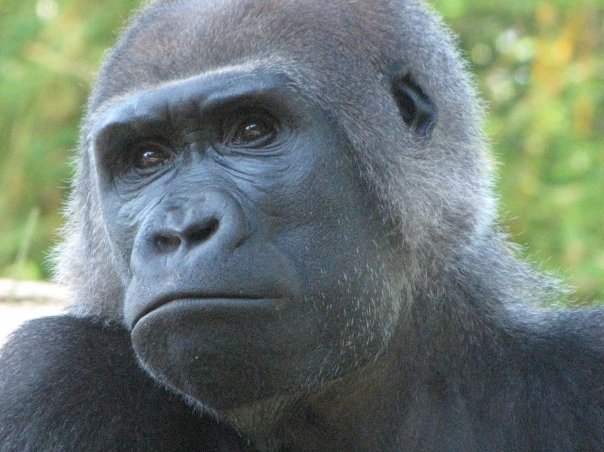
Compassion for all living things needs to be practiced to save our Planet...

Jane Goodall


‎"AND IF WE DARE TO LOOK INTO THOSE EYES, THEN WE SHALL FEEL THEIR SUFFERING IN OUR HEARTS. MORE AND MORE PEOPLE HAVE SEEN THAT APPEAL AND FELT IT IN THEIR HEARTS. 


ALL AROUND THE WORLD THERE IS AN AWAKENING OF UNDERSTANDING AND COMPASSION, AND UNDERSTANDING THAT REACHES OUT TO HELP THE SUFFERING ANIMALS IN THEIR VANISHING HOMELANDS. 


THAT EMBRACES HUNGRY, SICK, AND DESPERATE HUMAN BEINGS, PEOPLE WHO ARE STARVING WHILE THE FORTUNATE AMONG US HAVE SO MUCH MORE THAN WE NEED. 


AND IF, ONE BY ONE, WE HELP THEM, THE HURTING ANIMALS, THE DESPERATE HUMANS, THEN TOGETHER WE SHALL ALLEVIATE SO MUCH OF THE HUNGER, FEAR, AND PAIN IN THE WORLD. 


TOGETHER WE CAN BRING CHANGE TO THE WORLD, GRADUALLY REPLACING FEAR AND HATRED WITH COMPASSION AND LOVE. LOVE FOR ALL LIVING BEINGS."


If you don't see our "shared something" in his eyes, look again.


Homeostasis of Happiness: Moods Fluctuate


Elements of the
Wallenda Model

Variable: position of body
Setpoint: directly over the wire
Sensors: nerve receptors (eyes, inner ears, muscle stretch receptors, etc.)
Integrator: brain
Effectors: skeletal muscles
tightrope man


Homeostasis: The body's balance

homeo = same; stasis = standing
Homeostasis = relative constancy of the internal fluid environment

The concept was first articulated by the Frenchman, Claude Bernard in 1860s

The term "homeostasis" was first used by an American, Walter Bradford Cannon in 1920s

"The coordinated physiological processes which maintain most of the steady states in the organism are so complex and so peculiar to living beings ...that I have suggested a special designation for these states, homeostasis. The word does not imply something set and immobile, a stagnation. It means a condition—a condition which may vary, but which is relatively constant." —Walter B. Cannon

W. B. Cannon was the one who really established homeostasis as a unifying concept of human physiology.


Read more at the site:

Loving the World

MESSENGER

My work is loving the world.
Here the sunflowers, there the hummingbird —
equal seekers of sweetness.
Here the quickening yeast; there the blue plums.
Here the clam deep in the speckled sand.

Are my boots old? Is my coat torn?
Am I no longer young, and still not half-perfect? Let me
keep my mind on what matters,
which is my work,

which is mostly standing still and learning to be astonished.
The phoebe, the delphinium.
The sheep in the pasture, and the pasture.
Which is mostly rejoicing, since all ingredients are here,

which is gratitude, to be given a mind and a heart
and these body-clothes,
a mouth with which to give shouts of joy
to the moth and the wren, to the sleepy dug-up clam,
telling them all, over and over, how it is
that we live forever.

~ Mary Oliver, born in 1935, American poet

Positive Psychology: How Full Is Your Glass? | World of Psychology

Positive Psychology: How Full Is Your Glass? | World of Psychology:
How Full Is Your Glass? | World of Psychology : This realization ushered in a more global discussion of what positive psychology is actual...