Tuesday, April 2, 2019

Alexander Shulgin was a pioneer in Psychedelic Medicine


  Sasha Shulgin was the grandfather of this track of investigation in America:

Advances in Psychedelic Medicine: State-of-the-Art Therapeutic Applications


edited by Michael J. Winkelman, Ben Sessa MD
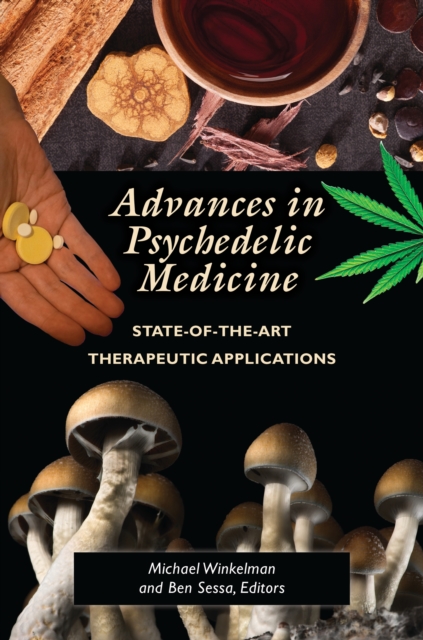


More than a decade ago, the U.S. government lifted its ban on all testing of psychedelic substances. Winkelman and Sessa now provide updated scientific research and applications of these substances, now moving into approved categories of medicine. The text is an up-to-date assessment of the latest advances in the field of psychedelic medicine, covering the use of LSD, psilocybin, MDMA, ayahuasca, and other substances to augment psychotherapies for a range of disorders. It discusses medical and psychiatric concerns, clinical efficacy and safety, ethical considerations, and neuroscience findings regarding the psychedelic compounds.


Topics covered include an overview of psychiatric applications of psychedelics; treatments for addictions and depressive disorders; effects of psychedelics on inflammation and neuroplasticity; evidence for clinical applications of DMT, ayahuasca, and cannabidiol; psychedelic treatment of sociopathic disorders; microdosing psychedelics; training psychedelic therapists; and community-based harm reduction approaches to managing psychedelic crises.


Mazatec Mushroom Usage: Notes on Approach, Setting and Species for Curious Psilonauts 


 Sam Gandy


“There is a world beyond ours, a world that is far away, nearby and invisible. And there is where God lives, where the dead live, the spirits and the saints, a world where everything has already happened and everything is known. This world talks. It has a language of its own. I report what it says. The sacred mushroom takes me by the hand and brings me to the world where everything is known. It is they, the sacred mushrooms, that speak in a way I can understand. I ask them and they answer me. When I return from the trip that I have taken with them, I tell what they have told me and what they have shown me.”
 – Maria Sabina


http://realitysandwich.com/323749/mazatec-mushroom-usage-notes-on-approach-setting-and-species-for-curious-psilonauts/


The approach used in modern therapeutic psilocybin sessions can be summarised as “trust, surrender, let go”. Expanding on this, Dr William Richards (senior Johns Hopkins psychedelic researcher at Johns Hopkins) offers the following insight:

“The same force that takes you deep within will, of its own impetus, return you safely to the everyday world,” the manual offers at one point. Guides are instructed to remind subjects that they’ll never be left alone and not to worry about their bodies while journeying, since they will be monitored. If you feel like you’re “dying, melting, dissolving, exploding, going crazy etc.—go ahead, embrace it: Climb staircases, open doors, explore paths, fly over landscapes.” And if you confront anything frightening, “look the monster in the eye and move towards it. . . . Dig in your heels; ask, ‘What are you doing in my mind?’ Or, ‘What can I learn from you?’ Look for the darkest corner in the basement, and shine your light there.”1

This approach has been successfully applied in therapeutic psilocybin sessions at Johns Hopkins, N.Y.U. and Imperial College London and other institutions exploring the therapeutic potential of psilocybin, and appears to buffer against the adverse reactions sometimes associated with recreational use of psilocybin. The recommended setting is a comfortable room with subdued lighting, with the participant lying down wearing eyeshades on a bed or sofa, listening to playlist of carefully selected, predominantly instrumental music (avoiding human vocals) playing through headphones, ensuring comfort and encouraging the experiencer to focus inwards. The lyrical narrative of human vocals is avoided as they tend to be emotive and powerfully influence people’s experiences in certain ways. This approach has its merits and the results of some of the modern studies speak for themselves.2,3,4,5,6 However, this is a stark divergence from the approach employed by Mazatec curanderos, or shamans.

Several indigenous groups in Mexico are known to practice the ceremonial use of Psilocybe mushrooms, or what they refer to as los Santos Niños (“the Little Saints”) or nti si tho (“the little ones who spring forth”): the Nahuatls in the states of Mexico, Morelos and Puebla; the Matlazincs in the state of Mexico; the Totonacs in the state of Veracruz; and the Mazatecs, Mixes, Zapotecs and Chatins in the state of Oaxaca.7 Of these, the epicentre of usage in Mexico can be considered among the Mazatec, who are considered to possess the greatest knowledge of mushroom lore. They employ mushrooms for problem solving, physical, psychological and spiritual healing, and seeking lost or stolen objects.

Ancient tradition calls for fasting prior to ingesting mushrooms, with the exception of fruit and water if necessary. Alcohol and other drugs are avoided before and after the ceremony, or velada. One is recommend to bathe prior to the experience and wear clean white or brightly coloured clothing, while black is avoided. Powdered San Pedro (Nicotiana rustica) tobacco may be used alongside the mushrooms, applied topically to the wrists and forearms by the shaman as a tonic for the body. The tobacco is believed to have magical and remedial qualities, and is also used as an offering on the altar. Sexual abstinence is usually recommended for several days before and after a ceremony, and pork tends to be avoided during this time.

Communion with the mushroom is to be approached with humility and respect, but not fear. One should remain calm and be prepared for mental turbulence that can accompany entry into the bemushroomed realms. It is good to remain silent and speak as little as possible, at least in the beginning phase of the mushroom velada. Excessive talking can detract from the focus and energy of the experience, so conversations are reserved for later. Only the mushroom imbibers should be present, and overall, the fewer the better, as too many people may taint the atmosphere.

A single species of Psilocybe is employed in a given ceremony, and mixing of different species is avoided. Mushrooms are cleansed in copal smoke prior to ingestion, and are consumed fresh, in pairs on an empty stomach. People are encouraged to take their time to chew the mushrooms thoroughly, which allows one’s system to adjust to the experience. Unsweetened cacao is often consumed alongside the mushrooms, this being a custom practiced by the Aztec as part of their mushroom ceremonies, and according to some it greatly intensifies the visionary aspect of the mushroom. Following consumption of the mushrooms, candles are blown out, and total darkness descends. Mazatec shamans may chant and perform bodywork on participants during the velada with their hands. 


Natalia blessing mushrooms in copal smoke. Credit: Christopher Casuse

Unlike the clinical therapeutic approach, the shaman ingests psilocybin alongside their patients. At the present time, patients are only permitted 1-3 psilocybin sessions in a research study context, whereas in the traditional Mazatec context, people have the option of repeated and regular sessions. The Mazatec often consume mushrooms in family groups, which is rare outside the traditional context of the velada.

The Mazatec velada setting is usually in the shaman’s home, in a room with an altar. Sessions take place during the night, often in darkness, or sometimes with candle light. This is to minimise distractions and focus the mind. A velada may begin in pitch darkness, to ensure that visions are bright and clear (an approach that well-known psilonaut Terrence McKenna also recommended), with candles lit at a later time. The presence of candles is important…beeswax candles are favoured by the Mazatec. Candle flames serve as a neutral and absorbing focal point for a tried and tested means of anchoring awareness in the present. Candle flames have been employed in this context by many cultures and traditions, such as in yogic Trataka meditation, Buddhist Kasina meditation and in Jewish ceremonies going back many centuries. The night is recognized as the time most conducive to visionary insights and deep inner work. Despite regional, cultural and linguistic differences between various indigenous groups, this setting and timing is a shared common element.

In the context of a Mazatec mushroom velada, the focal point of the setting is a traditional altar, comprising a table adorned with images of religious figures, local cultural deities, candles, flowers and saints. The syncretic nature of the post-Colombian Mazatec tradition made it easy for them to assimilate Christian imagery into their rituals following the Spanish invasion and the spread of Catholicism that accompanied it. Psilonauts are encouraged to focus on the candles and images, with sustained attention and avoiding “falling” into the trance, maintaining their intention on invoking the sacred. The typical Western approach, where people close their eyes and allow the music to guide them, has been described by Mazatec elder shaman Natalia Martinez as a “lazy approach”, which does not allow the full potential of the mushroom to manifest.

Of course, some Westerners may not be comfortable with pictures of religious figures, but an altar can be tailored to one’s personal resonance. For example, those with a more pantheistic perspective maybe prefer natural objects, such as shells, crystals, pine cones, flowers or feathers.


Mazatec style altar.

For those training with her, Natalia offers a full dinner plate of derrumbe (“landslide”) mushrooms (P. caerulescens) and encourages experiencers to maintain awareness throughout the experience. This is deemed an invaluable exercise in training one’s perception, in order that one can navigate their experience with a clear and centred mind, and allow one to work with what the mushroom presents to an undistracted mind. This is considered an essential part of the training for those who wish to provide mushroom veladas themselves. One sits erect on a small stool before the altar, maintaining awareness and open-eyed focus on the candles and images on the altar while remaining present. The altar acts as an anchor, providing a powerful means for orientating the experience and navigating challenging content when necessary. Natalia has been doing this work up to three times a week, for the past 40 years, and has amazing energy for an 87 year old woman.

Consuming mushrooms in the Mazatec setting can result in powerful experiences and openings, and this approach may yield a very distinct set of experiences from that of the Western therapeutic approach. Consumed regularly and consistently, weekly in some cases, the practice results in a set of progressive and deepening experiences, with each building upon the previous. Working with mushrooms in this way is considered by some to constitute a form of theurgy. In the US, taking mushrooms in this traditional manner means it may qualify as a sacred plant tradition, which would be protected under the Religious Freedom Act.

The Mazatec and other indigenous Psilocybe using groups tend to take the view that different species of mushroom have different qualities or their own ‘signature’. Some are revered more than others or used for specific purposes. This view is shared by ethnobotanist Kathleen Harrison, who has worked extensively with the Mazatec and various Psilocybe species, and is commonly echoed by experienced growers and psilonauts. In the context of indigenous mushroom usage, the more potent species tend to be revered more highly. There are 53 known species of Psilocybe mushrooms in Mexico, with around a third of these used ceremonially. Only a handful of species are frequently employed in veladas. Of these, the most important and commonly used species are P. caerulescens, P. mexicana, P. cubensis, P. zapotecorum and P. hoogshagenii.7 In the Aztec language Nahuatl the umbrella term teotlaquilnanácatl (“divine mushroom that describes or paints”) is applied across species.

The Mazatec hold P. caerulescens, known as the landslide or derrumbemushroom, in particularly high regard. This species is thought to have likely been used by the Aztecs in their rituals, as documented by 16th century Spanish chronicler Bernardino de Sahagún, and referred to as teonanácatl (“flesh of the gods”). It was this species through which R. Gordon Wasson and Tim Leary had their seminal introductions to psilocybin. It is revered for its potency and its fuerza or force, the mushrooms produce a strong, physically medicinal effect, sometimes experienced as deep waves of warmth and energy in the body.

P. zapotecorum is another highly regarded and potent species, another derrumbe mushroom, known as badao zoo (“drunken mushroom”) by the Zapotec Indians. It is held on par with P. caerulescens by the Mazatec, but is a species held in particularly high esteem by the Zapotecs, from which its name is derived, and it appears to have a long history of usage among them.

P. mexicana, known as pajaritos (“little bird”) is another highly revered species used by a number of Mexican indigenous groups, it being the mushroom from which the great chemist Albert Hofmann first extracted and identified psilocybin and psilocin. It was also the most cherished species of the Mazatec shaman Maria Sabina, responsible for introducing psilocybin mushrooms to the Western world. The Mazatec say of this species ‘que suave’ (‘how smooth’). The Zapotec give this mushroom to their children as they view it as the friendliest and most forgiving. It is known by many different names among the various indigenous Mexican groups that use it, referred to as nize (“little bird”) by the Mazatec.

Another species of note is P. hoogshagenii, which is employed shamanically by the Mixe and Zapotec, and it is known by a variety of different names. In Spanish, it is referred to as los niños or los Chamaquitos (“the little boys”) as pajaritos de monte (“little birds of the woods”) by the Mazatec, and atka:t (“judge”) by the Mixe, who deem it a very wise mushroom, sought after by shamans faced with an important philosophical decision. It is interesting to note that this species (in particular P. hoogshagenii var. convexa) is highly revered by psilonauts that have grown it. It is slow to fruit, but is said to be as easy (if not easier) to cultivate than the more widely known P. cubensis. It was originally assigned the species name ‘semperviva’ which translates as ‘undying’, due to its highly resilient and tenacious nature and its ability to produce many flushes of highly potent mushrooms over many months.

P. cubensis, the San Isidro mushroom was made famous by the McKenna brothers. It has a pan-tropical distribution, growing throughout tropical and subtropical zones of the world, having spread alongside cattle farming as it grows on bovine dung. It is easily cultivated and fruits abundantly, and as a result has been cultivated worldwide. In Mexico, P. cubensis is used widely by a number of different indigenous groups, and is a dependable ally, fruiting abundantly and possessing a long growing season. It is known as di-shi-tjo-le-ra-ja (“divine mushroom of manure”) by the Mazatec. It is certainly not one of the more revered species however, and among Mexican Psilocybe-using groups is widely considered to occupy the lowest rung of the ladder of shamanic mushroom preference. Perhaps this is due to its non-native status (having being brought in with Spanish cattle), its habit of growing on dung, or its lower potency or different experiential qualities compared to other species.

San Isidro is the patron saint of the fields, farming and labour (this mushroom thriving in farmland), and some Mazatec will consume this mushroom prior to building a house or tilling a new field, or prior to embarking on some important work to give them clarity and luck. However, not all shamans will work with P. cubensis, including Maria Sabina, who never worked with it in her veladas.8However, Mestizo charlatan shamans have been known to use P. cubensis in ceremonies as a means of generating income from tourists. In 1988, Terrence McKenna had an experience with P. cubensis that was so harrowing that he swore off heroic mushroom doses altogether.9 Psilonauts with extensive experience of the different species almost universally hold the view that those revered by shamans surpass P. cubensis in experiential qualities. This species with its universal accessibility, has been profoundly important, extending its mycelial tendrils into the brains of so many members of our species, but there is more to the Psilocybe mushroom world than it alone.

The Mazatec have over 500+ years of experience of working with mushrooms and far deeper knowledge of their phenomenology and application in healing than Westerners, who are comparative newcomers to the mushroom. There is much to be learned from the Mazatec shamans, and the loss of their knowledge would be a tragedy. Due to the advent of modern medicine however, the increasing domination of Western civilisation in Mazatecan lands, and the subsequent erosion of their cultural traditions, very few of the younger generation of Mazatec are interested in pursuing healing work using mushrooms. The traditional Mazatecan shamanic approach to working with the mushroom may soon become extinct, so we ought to prioritise the preservation and transmission of their knowledge.


References
Pollan, M. (2015, February 9th) The Trip Treatment. Retrieved from https://www.newyorker.com/magazine/2015/02/09/trip-treatment
Carhart-Harris, R.L., Bolstridge, M., Day, C.M.J., Rucker J., Watts, R., Erritzoe, D.E., Kaelen, M., Giribaldi, B., Bloomfield, M., Pilling, S., Rickard, J.A., Forbes, B., Feilding, A., Taylor, D., Curran, H.V., Nutt, D.J. (2018) Psilocybin with psychological support for treatment-resistant depression: six month follow-up. Psychopharmacology, 235(2): 399-408.
Griffiths, R.R., Johnson, M.W., Carducci, M.A., Umbricht, A., Richards, W.A., Richards, B.D., Cosimano, M.P., Klinedinst, M. A. (2016). Psilocybin produces substantial and sustained decreases in depression and anxiety in patients with life-threatening cancer: A randomized doubleblind trial. Journal of Psychopharmacology, 30(12): 1181–1197.
Griffiths, R.R., Johnson, M.W., Richards, W.A., Richards, B. ., Jesse, R., MacLean, K.A., Barrett, F.S., Cosimano, M.P., Klinedinst, M. A. (2017). Psilocybin-occasioned mystical-type experience in combination with meditation and other spiritual practices produces enduring positive changes in psychological functioning and in trait measures of prosocial attitudes and behaviours. Journal of Psychopharmacology, 32(1): 49-69.
Griffiths, R. R., Richards, W. A., McCann, U., & Jesse, R. (2006). Psilocybin can occasion mystical-type experiences having substantial and sustained personal meaning and spiritual significance. Psychopharmacology, 187(3): 268–283.
Ross, S., Bossis, A., Guss, J., Agin-Liebes, G., Malone, T., Cohen, B., Mennenga, S.E., Belser, A., Kalliontzi, K., Babb, J., Su, Z., Corby, P., Schmidt, B.L. (2016) Rapid and sustained symptom reduction following psilocybin treatment for anxiety and depression in patients with life-threatening cancer: A randomized controlled trial. Journal of Psychopharmacology, 30(12): 1165–1180.
Guzmán, G. (2008) Hallucinogenic Mushrooms in Mexico: An Overview. Economic Botany, 62(3): 404-412.
Schultes, R.E., Hofmann, A., Rätsch, C. (2001) Plants of the Gods: Their Sacred, Healing, and Hallucinogenic Powers. Rochester, Vermont, USA: Healing Arts Press.
McKenna, D. (2012) The Brotherhood of the Screaming Abyss. Clearwater, Minnesota, USA: North Star Press of St. Cloud.


AUTHOR


twitter website

PhD ecologist and writer, with a passion for nature and psychedelics.


Source: 


http://realitysandwich.com/323749/mazatec-mushroom-usage-notes-on-approach-setting-and-species-for-curious-psilonauts/


 

Wednesday, November 23, 2016

Be Happy


Uploaded on Jul 1, 2011

Is happiness a skill? Modern neuroscientific research and the wisdom of ancient contemplative traditions converge in suggesting that happiness is the product of skills that can be enhanced through training and such training exemplifies how transforming the mind can change the brain. 

Kent Berridge, Richie Davidson, and Daniel Gilbert speak at the Aspen Ideas Festival
.


Leonard Cohen: Hallelujah


Leonard Cohen Credit Dominique Issermann

  Leonard Cohen: Darkness and Praise

The email from the boy began: “Did anything inspire you to create Hallelujah?"

Later that same winter day the reply arrived: 
“I wanted to stand with those who clearly see God’s holy broken world for what it is, and still find the courage or the heart to praise it. You don’t always get what you want. You’re not always up for the challenge. But in this case — it was given to me. For which I am deeply grateful.”
The question came from the author's son, who was preparing to present the hymn to his fifth-grade class. The boy required a clarification about its meaning. The answer came from the author of the song, Leonard Cohen.
Cohen lived in a weather of wisdom, which he created by seeking it rather than by finding it. He swam in beauty, because in its transience he aspired to discern a glimpse of eternity.
There was always a trace of philosophy in his sensuality.
He managed to combine a sense of absurdity with a sense of significance, a genuine feat.
He was a friend of melancholy but an enemy of gloom, and a renegade enamored of tradition.
Leonard was, above all, in his music and in his poems and in his tone of life, the lyrical advocate of the finite and the flawed.
Leonard sang always as a sinner. He refused to describe sin as a failure or a disqualification. Sin was a condition of life. 

“Even though it all went wrong/ I’ll stand before the Lord of song/ With nothing on my tongue but Hallelujah!”
The singer’s faults do not expel him from the divine presence. Instead they confer a mortal integrity upon his exclamation of praise. 

He is the inadequate man, the lowly man, the hurt man who has given hurt, insisting modestly but stubbornly upon his right to a sacred exaltation.

“There is a crack in everything. That’s how the light gets in.”  

He once told an interviewer that those words were the closest he came to a credo.  

The teaching could not be more plain: fix the crack, lose the light.
  
Here is a passage on frivolity by a great rabbi in Prague at the end of the 16th century:

“Man was born for toil, since his perfection is always being actualized but is never actual,” 
he observed in an essay on frivolity.
“And insofar as he attains perfection, something is missing in him.  In such a being, 
perfection is a shortcoming and a lack.”

Leonard Cohen was the poet laureate of the lack, the psalmist of the privation, who made imperfection gorgeous.


Link: http://www.nytimes.com/2016/11/14/opinion/my-friend-leonard-cohen-darkness-and-praise.html?ribbon-ad-idx=3&src=trending


Tuesday, November 22, 2016

Living with a sense of purpose in life


Conclusion:

A sense of purpose in life also gives you this considerable advantage:
"People with a sense of purpose in life have a lower risk of death and cardiovascular disease."

The conclusions come from over 136,000 people who took part in 10 different studies.

Participants in the studies were mostly from the US and Japan.


The US studies asked people:
  • how useful they felt to others,
  • about their sense of purpose, and
  • the meaning they got out of life.


The Japanese studies asked people about ‘ikigai’ or whether their life was worth living.

The participants, whose average age was 67, were tracked for around 7 years.

During that time almost 20,000 died.
 
But, amongst those with a strong sense of purpose or high ‘ikigai’, the risk of death was one-fifth lower.

Despite the link between sense of purpose and health being so intuitive, scientists are not sure of the mechanism.

Sense of purpose is likely to improve health by strengthening the body against stress.

It is also likely to be linked to healthier behaviours.

Dr. Alan Rozanski, one of the study’s authors, said:
“Of note, having a strong sense of life purpose has long been postulated to be an important dimension of life, providing people with a sense of vitality motivation and resilience.
Nevertheless, the medical implications of living with a high or low sense of life purpose have only recently caught the attention of investigators.
The current findings are important because they may open up new potential interventions for helping people to promote their health and sense of well-being.”

This research on links between sense of purpose in life and longevity is getting stronger all the time:
  • “A 2009 study of 1,238 elderly people found that those with a sense of purpose lived longer.
  • A 2010 study of 900 older adults found that those with a greater sense of purpose were much less likely to develop Alzheimer’s disease.
  • Survey data often links a sense of purpose in life with increased happiness.
No matter what your age, then, it’s worth thinking about what gives your life meaning.”


Read More:

Find out what kinds of things people say give their lives meaning.
Here’s an exercise for increasing meaningfulness
And a study finding that feeling you belong increases the sense of meaning.

The study was published in the journal Psychosomatic Medicine (Cohen et al., 2015).


A sense of purpose in life
Link: http://www.spring.org.uk/2015/12/here-is-why-a-sense-of-purpose-in-life-is-important-for-health

Wednesday, April 27, 2016

Mindful Awareness

UCLA Mindful Awareness Research Center

Mindfulness is making the news these days. It has been depicted in the media primarily as a tool to hone attention, to cultivate sensory awareness, and to keep us in the present moment.

Developing these tools takes effort and determination, but why is it we can sometimes be mindful without really even trying? Perhaps we were naturally mindful at points in life before we ever learned what mindfulness was. Maybe we feel naturally connected, present, and at ease in nature. Or we become mindful while talking authentically with a friend, or in the midst of music, art, or athletic activity.

Mindfulness is not only a meditation technique, but also a state of being. This state is available to anyone; it is a natural human capacity. Mindfulness practice, as a tool, is tremendously helpful to cultivate this awareness, and the state can arise at any moment. Mindfulness is also connected to a set of powerful outcomes: happiness, emotional regulation, compassion, altruism, and kindness.

We encourage you to attend an array of offerings to cultivate the moment-to-moment awareness, which is the foundation of our practice.


 Link: http://marc.ucla.edu/

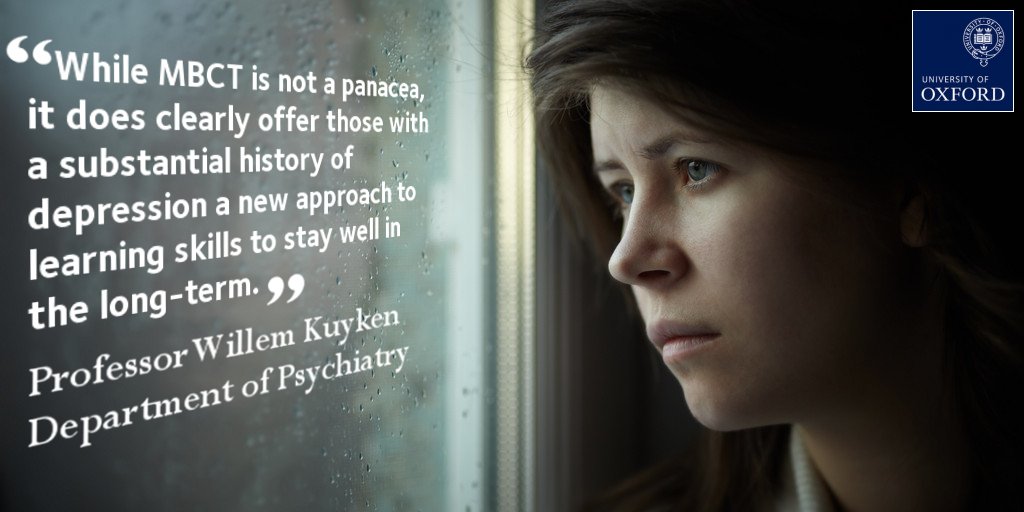
Mindfulness-based cognitive therapy can help prevent recurrence of depression.


Review finds mindfulness-based cognitive therapy can help prevent recurrence of depression.

Friday, January 15, 2016

Positive Psychology News

Forbes
The powerful idea behind positive psychology is that we can accomplish our aims most effectively by exercising and building on our strengths, not just by shoring up our vulnerabilities. Reducing boredom on the job won't create a fulfilling career ...
 
Irish Times
Tal Ben-Shahar is a best-selling author, academic and entrepreneur in the field of positive psychology. In 2006, his course on positive psychology became the most popular class at Harvard University. Since then he has cofounded Potentialife, a year ...
 
Newswire
(Newswire.net -- January 4, 2016) -- Recent research in positive psychology shows happiness is more than a mood or a feeling—it's a skill. A new app called Feed Your Happy, launching today, helps people practice techniques to reprogram negative ...
 
Santa Maria Sun
Delta High School's Free Holiday Store, stocked with clothing, opened for two


Self Improvement

Victorville Daily Press
The Today's Woman Foundation is hosting a transformational workshop from 9 a.m. to noon Saturday at Sun View Plaza, 13010 Hesperia Road in Victorville. The event will be facilitated by Cindy M. Bostick, a certified transformative coach and “Best Year ...
Harvard Business Review
We examined roughly 7,000 self-assessments, and focused on a group of questions that measured a “proving” versus “improving” orientation. For instance, we asked people what happened the last time they were given negative feedback – did they challenge ...
Idaho State Journal
Specifically, Idaho State is focused on improving an offense that's sixth in the conference in scoring at 73.5 points per game and 11th in field goal percentage (41.5). Sac State doesn't have any glaring weaknesses like North Dakota did, and the ...
The Globe and Mail
Don't tell me about self-improvement. I've been improving myself for decades. I have dieted, exercised, made to-do lists and then lost them. I have striven to be more efficient and productive, waste less time, watch more TED talks, tidy my desk, write ...


Living with a sense of purpose in life


Conclusion:

A sense of purpose in life also gives you this considerable advantage:
"People with a sense of purpose in life have a lower risk of death and cardiovascular disease."

The conclusions come from over 136,000 people who took part in 10 different studies.

Participants in the studies were mostly from the US and Japan.


The US studies asked people:
  • how useful they felt to others,
  • about their sense of purpose, and
  • the meaning they got out of life.


The Japanese studies asked people about ‘ikigai’ or whether their life was worth living.

The participants, whose average age was 67, were tracked for around 7 years.

During that time almost 20,000 died.
 
But, amongst those with a strong sense of purpose or high ‘ikigai’, the risk of death was one-fifth lower.

Despite the link between sense of purpose and health being so intuitive, scientists are not sure of the mechanism.

Sense of purpose is likely to improve health by strengthening the body against stress.

It is also likely to be linked to healthier behaviours.

Dr. Alan Rozanski, one of the study’s authors, said:
“Of note, having a strong sense of life purpose has long been postulated to be an important dimension of life, providing people with a sense of vitality motivation and resilience.
Nevertheless, the medical implications of living with a high or low sense of life purpose have only recently caught the attention of investigators.
The current findings are important because they may open up new potential interventions for helping people to promote their health and sense of well-being.”

This research on links between sense of purpose in life and longevity is getting stronger all the time:
  • “A 2009 study of 1,238 elderly people found that those with a sense of purpose lived longer.
  • A 2010 study of 900 older adults found that those with a greater sense of purpose were much less likely to develop Alzheimer’s disease.
  • Survey data often links a sense of purpose in life with increased happiness.
No matter what your age, then, it’s worth thinking about what gives your life meaning.”


Read More:

Find out what kinds of things people say give their lives meaning.
Here’s an exercise for increasing meaningfulness
And a study finding that feeling you belong increases the sense of meaning.

The study was published in the journal Psychosomatic Medicine (Cohen et al., 2015).


A sense of purpose in life
Link: http://www.spring.org.uk/2015/12/here-is-why-a-sense-of-purpose-in-life-is-important-for-health

Thursday, October 1, 2015

The Science and Practice of Happiness Across the Lifespan

Uploaded on Jul 1, 2011

Is happiness a skill? Modern neuroscientific research and the wisdom of ancient contemplative traditions converge in suggesting that happiness is the product of skills that can be enhanced through training and such training exemplifies how transforming the mind can change the brain. 

Kent Berridge, Richie Davidson, and Daniel Gilbert speak at the Aspen Ideas Festival
.


Earl Nightingale provides inspiration


 This is a transcript...

The Strangest Secret


Transcribed from The Strangest Secret audio program by Earl Nightingale


Some years ago, the late Nobel prize-winning Dr. Albert Schweitzer was asked by a reporter, “Doctor, what’s wrong with men today?” The great doctor was silent a moment, and then he said, “Men simply don’t think!”

It’s about this that I want to talk with you. We live today in a golden age. This is an era that humanity has looked forward to, dreamed of, and worked toward for thousands of years. We live in the richest era that ever existed on the face of the earth … a land of abundant opportunity for everyone.

However, if you take 100 individuals who start even at the age of 25, do you have any idea what will happen to those men and women by the time they’re 65? These 100 people believe they’re going to be successful. They are eager toward life, there is a certain sparkle in their eye, an erectness to their carriage, and life seems like a pretty interesting adventure to them.

But by the time they’re 65, only one will be rich, four will be financially independent, five will still be working, and 54 will be broke and depending on others for life’s necessities.

Only five out of 100 make the grade! Why do so many fail? What has happened to the sparkle that was there when they were 25? What has become of the dreams, the hopes, the plans … and why is there such a large disparity between what these people intended to do and what they actually accomplished?

THE DEFINITION OF SUCCESS

First, we have to define success and here is the best definition I’ve ever been able to find:

“Success is the progressive realization of a worthy ideal.”

A success is the school teacher who is teaching because that’s what he or she wants to do. A success is the entrepreneur who start his own company because that was his dream and that’s what he wanted to do. A success is the salesperson who wants to become the best salesperson in his or her company and sets forth on the pursuit of that goal.

A success is anyone who is realizing a worthy predetermined ideal, because that’s what he or she decided to do … deliberately. But only one out of 20 does that! The rest are “failures.”

Rollo May, the distinguished psychiatrist, wrote a wonderful book called Man’s Search for Himself, and in this book he says: “The opposite of courage in our society is not cowardice … it is conformity.” And there you have the reason for so many failures. Conformity and people acting like everyone else, without knowing why or where they are going.

We learn to read by the time we’re seven. We learn to make a living by the time we’re 30. Often by that time we’re not only making a living, we’re supporting a family. And yet by the time we’re 65, we haven’t learned how to become financially independent in the richest land that has ever been known. Why? We conform! Most of us are acting like the wrong percentage group and the 95 who don’t succeed.

GOALS

Have you ever wondered why so many people work so hard and honestly without ever achieving anything in particular, and why others don’t seem to work hard, yet seem to get everything? They seem to have the “magic touch.” You’ve heard people say, “Everything he touches turns to gold.” Have you ever noticed that a person who becomes successful tends to continue to become more successful? And, on the other hand, have you noticed how someone who’s a failure tends to continue to fail?

The difference is goals. 

People with goals succeed because they know where they’re going. It’s that simple. 

Failures, on the other hand, believe that their lives are shaped by circumstances … by things that happen to them … by exterior forces.
Think of a ship with the complete voyage mapped out and planned. The captain and crew know exactly where the ship is going and how long it will take and it has a definite goal. And 9,999 times out of 10,000, it will get there.

Now let’s take another ship and just like the first and only let’s not put a crew on it, or a captain at the helm. Let’s give it no aiming point, no goal, and no destination. We just start the engines and let it go. I think you’ll agree that if it gets out of the harbor at all, it will either sink or wind up on some deserted beach and a derelict. It can’t go anyplace because it has no destination and no guidance.

It’s the same with a human being. However, the human race is fixed, not to prevent the strong from winning, but to prevent the weak from losing. Society today can be likened to a convoy in time of war. The entire society is slowed down to protect its weakest link, just as the naval convoy has to go at the speed that will permit its slowest vessel to remain in formation.

That’s why it’s so easy to make a living today. It takes no particular brains or talent to make a living and support a family today. We have a plateau of so-called “security.” So, to succeed, all we must do is decide how high above this plateau we want to aim.

Throughout history, the great wise men and teachers, philosophers, and prophets have disagreed with one another on many different things. It is only on this one point that they are in complete and unanimous agreement and the key to success and the key to failure is this:

WE BECOME WHAT WE THINK ABOUT

This is The Strangest Secret! Now, why do I say it’s strange, and why do I call it a secret? Actually, it isn’t a secret at all. It was first promulgated by some of the earliest wise men, and it appears again and again throughout the Bible. But very few people have learned it or understand it. That’s why it’s strange, and why for some equally strange reason it virtually remains a secret.

Marcus Aurelius, the great Roman Emperor, said: “A man’s life is what his thoughts make of it.”

Disraeli said this: “Everything comes if a man will only wait … a human being with a settled purpose must accomplish it, and nothing can resist a will that will stake even existence for its fulfillment.”

William James said: “We need only in cold blood act as if the thing in question were real, and it will become infallibly real by growing into such a connection with our life that it will become real. It will become so knit with habit and emotion that our interests in it will be those which characterize belief.” 

He continues, ” … only you must, then, really wish these things, and wish them exclusively, and not wish at the same time a hundred other incompatible things just as strongly.”

My old friend Dr. Norman Vincent Peale put it this way: “If you think in negative terms, you will get negative results. If you think in positive terms, you will achieve positive results.” 

George Bernard Shaw said: “People are always blaming their circumstances for what they are. I don’t believe in circumstances. The people who get on in this world are the people who get up and look for the circumstances they want, and if they can’t find them, make them.”

Well, it’s pretty apparent, isn’t it?   We become what we think about. 

A person who is thinking about a concrete and worthwhile goal is going to reach it, because that’s what he’s thinking about. 

Conversely, the person who has no goal, who doesn’t know where he’s going, and whose thoughts must therefore be thoughts of confusion, anxiety, fear, and worry will thereby create a life of frustration, fear, anxiety and worry. And if he thinks about nothing … he becomes nothing.


AS YE SOW, SO SHALL YE REAP

The human mind is much like a farmer’s land. The land gives the farmer a choice. He may plant in that land whatever he chooses. The land doesn’t care what is planted. It’s up to the farmer to make the decision. 

The mind, like the land, will return what you plant, but it doesn’t care what you plant. If the farmer plants too seeds and one a seed of corn, the other nightshade, a deadly poison, waters and takes care of the land, what will happen?

Remember, the land doesn’t care. It will return poison in just as wonderful abundance as it will corn. So up come the two plants and one corn, one poison as it’s written in the Bible, “As ye sow, so shall ye reap.”

The human mind is far more fertile, far more incredible and mysterious than the land, but it works the same way. It doesn’t care what we plant … success … or failure. A concrete, worthwhile goal … or confusion, misunderstanding, fear, anxiety, and so on. But what we plant it must return to us.


The problem is that our mind comes as standard equipment at birth. It’s free. And things that are given to us for nothing, we place little value on. Things that we pay money for, we value.

The paradox is that exactly the reverse is true. 

Everything that’s really worthwhile in life came to us free and our minds, our souls, our bodies, our hopes, our dreams, our ambitions, our intelligence, our love of family and children and friends and country. All these priceless possessions are free.

But the things that cost us money are actually very cheap and can be replaced at any time. A good man can be completely wiped out and make another fortune. He can do that several times. Even if our home burns down, we can rebuild it. But the things we got for nothing, we can never replace.

Our mind can do any kind of job we assign to it, but generally speaking, we use it for little jobs instead of big ones. 


So decide now. What is it you want? Plant your goal in your mind. It’s the most important decision you’ll ever make in your entire life.

Do you want to excel at your particular job? Do you want to go places in your company … in your community? Do you want to get rich?

All you have got to do is plant that seed in your mind, care for it, work steadily toward your goal, and it will become a reality.

It not only will, there’s no way that it cannot. You see, that’s a law and like the laws of Sir Isaac Newton, the laws of gravity. If you get on top of a building and jump off, you’ll always go down and you’ll never go up.

And it’s the same with all the other laws of nature. They always work. They’re inflexible. 

Think about your goal in a relaxed, positive way. 

Picture yourself in your mind’s eye as having already achieved this goal. 

See yourself doing the things you will be doing when you have reached your goal.

Every one of us is the sum total of our own thoughts. 

We are where we are because that’s exactly where we really want or feel we deserve to be and whether we’ll admit that or not. 

Each of us must live off the fruit of our thoughts in the future, because what you think today and tomorrow and next month and next year and will mold your life and determine your future. You’re guided by your mind.

I remember one time I was driving through e a s t e r n Arizona and I saw one of those giant earth-moving machines roaring along the road with what looked like 30 tons of dirt in it and a tremendous, incredible machine and and there was a little man perched way up on top with the wheel in his hands, guiding it.

As I drove along I was struck by the similarity of that machine to the human mind. 

Just suppose you’re sitting at the controls of such a vast source of energy. 

Are you going to sit back and fold your arms and let it run itself into a ditch?

Or are you going to keep both hands firmly on the wheel and control and direct this power to a specific, worthwhile purpose? 

It’s up to you. You’re in the driver’s seat. 

You see, the very law that gives us success is a double-edged sword. 

We must control our thinking. 

The same rule that can lead people to lives of success, wealth, happiness, and all the things they ever dreamed of and that very same law can lead them into the gutter. 

It’s all in how they use it … for good or for bad. 

That is The Strangest Secret!

Do what the experts since the dawn of recorded history have told us to do:

pay the price, by becoming the person you want to become. 

It’s not nearly as difficult as living unsuccessfully.

The moment you decide on a goal to work toward, you’re immediately a successful person 
and you are then in that rare group of people who know where they’re going. 

Out of every hundred people, you belong to the top five. 

Don’t concern yourself too much with how you are going to achieve your goal.

 Leave that completely to a power greater than yourself. 

All you have to do is know where you’re going. The answers will come to you of their own accord, and at the right time.

Start today. You have nothing to lose and but you have your whole life to win.


30-DAY ACTION IDEAS FOR PUTTING THE STRANGEST SECRET TO WORK FOR YOU:

For the next 30-days follow each of these steps every day until you have achieved your goal.

1. Write on a card what it is you want more that anything else
. It may be more money. Perhaps you’d like to double your income or make a specific amount of money. It may be a beautiful home. It may be success at your job. It may be a particular position in life. It could be a more harmonious family.

Write down on your card specifically what it is you want. Make sure it’s a single goal and clearly defined. 
You needn’t show it to anyone, but carry it with you so that you can look at it several times a day. 

Think about it in a cheerful, relaxed, positive way each morning when you get up, and immediately you have something to work for and something to get out of bed for, something to live for.

Look at it every chance you get during the day and just before going to bed at night. 


As you look at it, remember that you must become what you think about, and since you’re thinking about your goal, you realize that soon it will be yours. In fact, it’s really yours the moment you write it down and begin to think about it.

2. Stop thinking about what it is you fear. 

Each time a fearful or negative thought comes into your mind, replace it with a mental picture of your positive and worthwhile goal. 

And there will come a time when you’ll feel like giving up. It’s easier for a human being to think negatively than positively. That’s why only five percent are successful! You must begin now to place yourself in that group.

“Act as though it were impossible to fail,” as Dorothea Brande said. No matter what your goal, if you’ve kept your goal before you every day, you’ll wonder and marvel at this new life you’ve found.


3. Your success will always be measured by the quality and quantity of service you render. 

Most people will tell you that they want to make money, without understanding this law. The only people who make money work in a mint. The rest of us must earn money. This is what causes those who keep looking for something for nothing, or a free ride, to fail in life. 

Success is not the result of making money; earning money is the result of success and and success is in direct proportion to our service.

Most people have this law backwards. It’s like the man who stands in front of the stove and says to it: “Give me heat and then I’ll add the wood.” 

How many men and women do you know, or do you suppose there are today, who take the same attitude toward life? There are millions.

We’ve got to put the fuel in before we can expect heat. 


Likewise, we’ve got to be of service first before we can expect money

Don’t concern yourself with the money. Be of service … build … work … dream … create! Do this and you’ll find there is no limit to the prosperity and abundance that will come to you.

Don’t start your test until you’ve made up your mind to stick with it. If you should fail during your first 30 days and by that I mean suddenly find yourself overwhelmed by negative thoughts and simply start over again from that point and go 30 more days.

Gradually, your new habit will form, until you find yourself one of that wonderful minority to whom virtually nothing is impossible.

Above all … don’t worry! Worry brings fear, and fear is crippling. 


The only thing that can cause you to worry during your test is trying to do it all yourself

Know that all you have to do is hold your goal before you; everything else will take care of itself.

Take this 30-day test, then repeat it … then repeat it again. Each time it will become more a part of you until you’ll wonder how you could have ever have lived any other way.

Live this new way and the floodgates of abundance will open and pour over you more riches than you may have dreamed existed. Money? Yes, lots of it. 

But what’s more important, you’ll have peace … you’ll be in that wonderful minority who lead calm, cheerful, successful lives.


Learn more about Earl Nightingale and his many timeless books and audio programs.
The Strangest Secret
The Strangest Secret Article by: Earl Nightingale


See more at: 


Learn more about Earl Nightingale and his many timeless books and audio programs.

The Strangest Secret - Advantedge Article By Earl Nightingale

LINK:  http://www.nightingale.com/ae_article~i~22~article~strangestsecret.aspx


The Strangest Secret Earl Nightingale Conant 1950's Origional FULL 31:35 Min.
31:35 - 4 years ago
Earl Nightingale Conant The Strangest Secret 1956 1950's